Here's a sobering statistic: security operators miss up to 45% of critical events when monitoring multiple CCTV screens for extended periods. Human attention naturally declines after just 20 minutes of continuous surveillance monitoring. This isn't a failure of training or dedication—it's simply how our brains work.
For businesses across Indonesia investing millions in CCTV infrastructure, this presents a critical question: Is your surveillance system actually protecting your assets, or is it just recording incidents for post-event review?
The emergence of AI-powered CCTV has fundamentally changed what's possible with video surveillance. But is it right for your business? In this comprehensive guide, we'll break down exactly how traditional CCTV compares to AI-enhanced systems, when an upgrade makes sense, and what you can realistically expect from the transition.
How Traditional CCTV Works
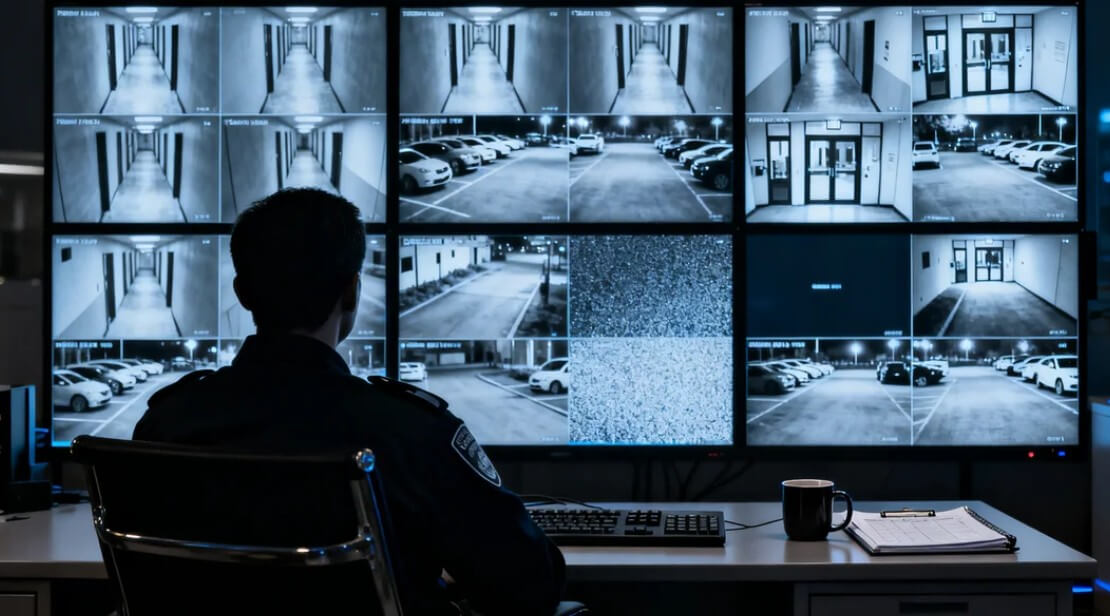
Traditional Closed-Circuit Television (CCTV) systems have been the backbone of security infrastructure for decades. The concept is straightforward: cameras capture video footage, transmit it to a recording device (DVR or NVR), and store it for later review.
The Traditional CCTV Workflow
- Capture: Cameras continuously record video footage
- Transmit: Footage is sent to a central recording unit
- Store: Videos are saved to hard drives (typically 7-30 days)
- Monitor: Security personnel watch live feeds on multiple screens
- Review: After incidents, staff manually search through footage
Key Limitations of Traditional Systems
While traditional CCTV serves its purpose, several inherent limitations affect its effectiveness:
- Reactive, Not Proactive: Traditional systems excel at recording what happened, but they can't prevent incidents in real-time. By the time someone reviews the footage, the damage is done.
- Human Attention Constraints: Research shows that after 20-30 minutes of watching screens, operator attention drops significantly. A security guard monitoring 16 cameras simply cannot maintain consistent vigilance across all feeds.
- Time-Consuming Forensics: Finding specific incidents in hours or days of footage is like searching for a needle in a haystack. Staff may spend hours scrubbing through recordings.
- High False Alarm Rates: Basic motion detection triggers alerts for everything—shadows, animals, leaves, rain—leading to alert fatigue and ignored warnings.
How AI-Powered CCTV Works
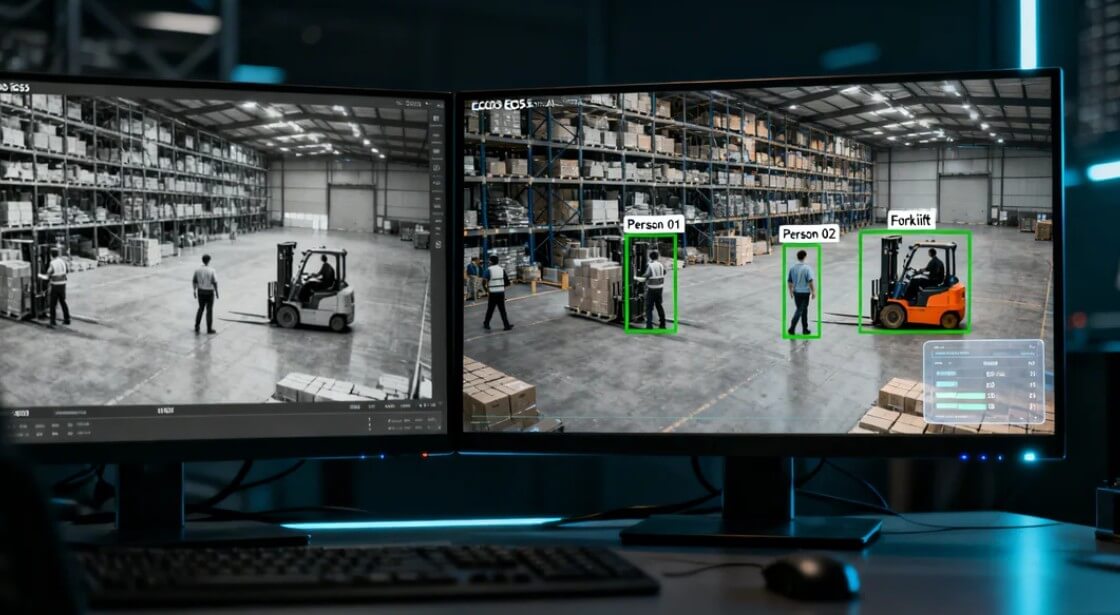
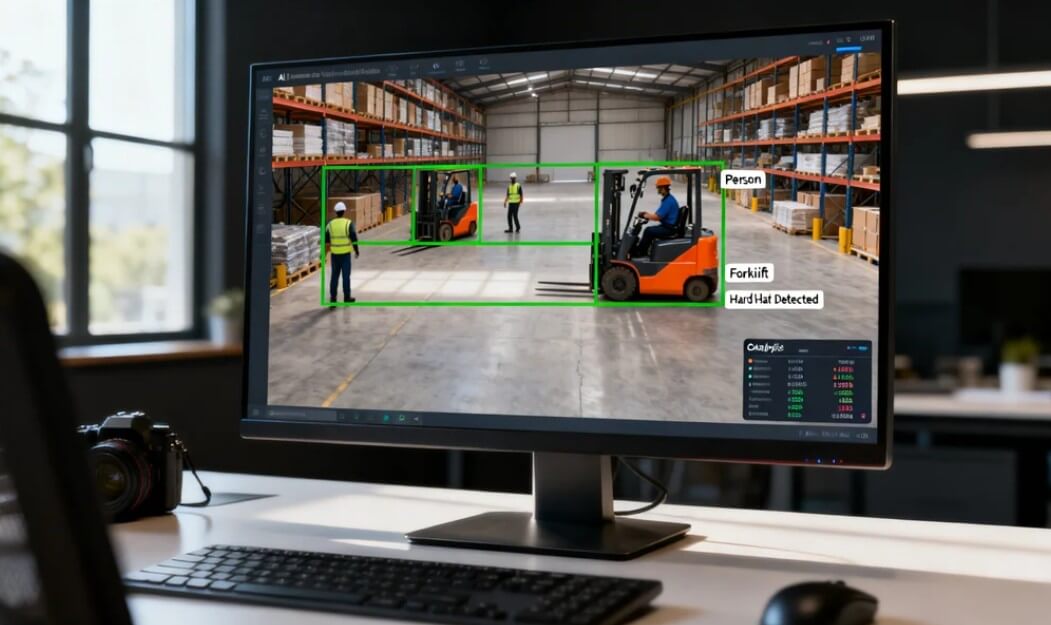
AI-powered CCTV takes the same camera infrastructure and adds an intelligent layer that can understand what it's seeing. Using computer vision and deep learning algorithms, these systems analyze video feeds in real-time to detect, classify, and respond to specific events.
The AI-Enhanced Workflow
- Capture: Existing cameras record video (same as traditional)
- Analyze: AI processes every frame, identifying objects, people, and behaviors
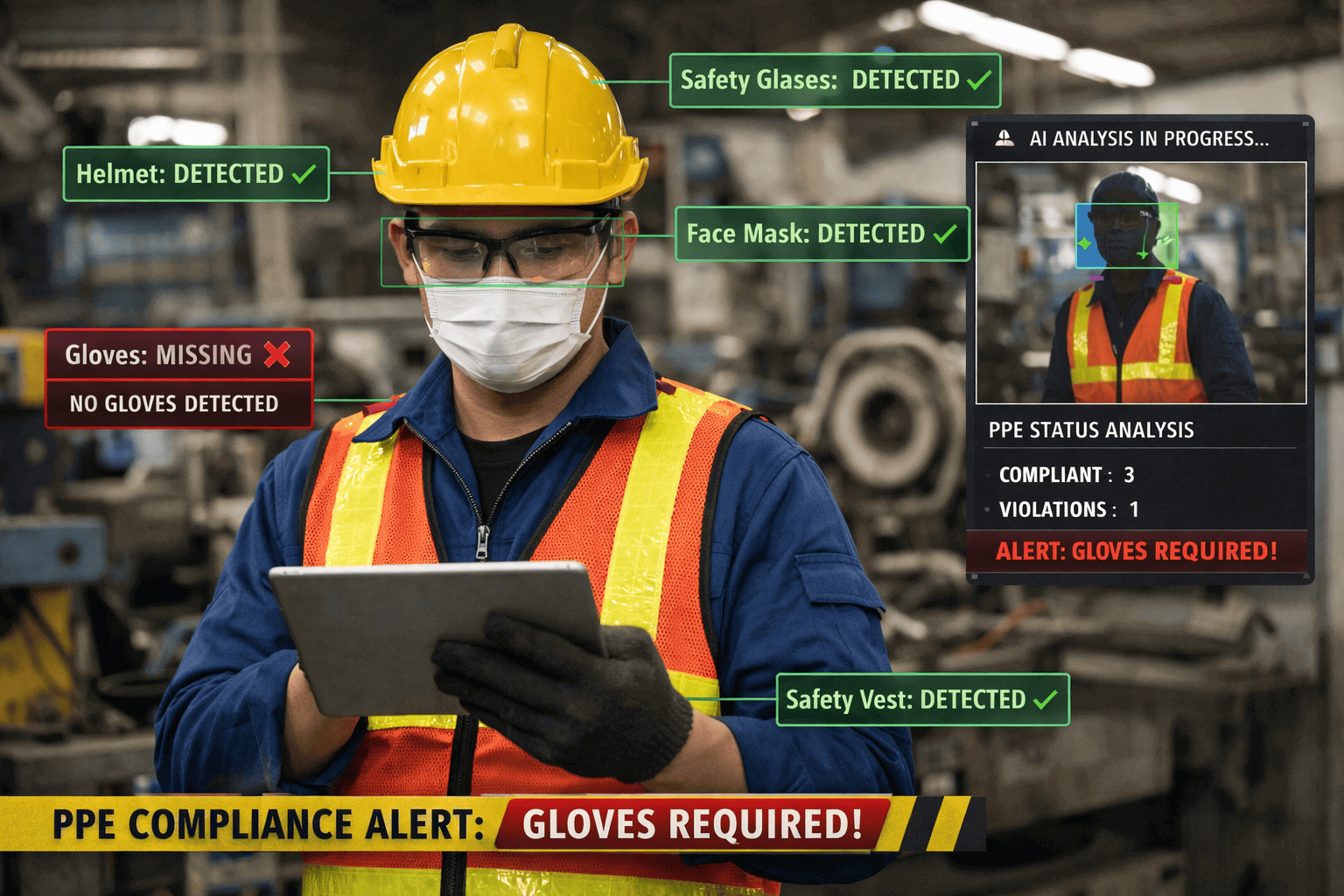
- Detect: System recognizes predefined events (intrusion, missing PPE, crowd formation)
- Alert: Instant notifications sent to relevant personnel with context
- Document: Events are automatically tagged and catalogued for easy retrieval
AI doesn't replace your cameras—it gives them the ability to understand what they're seeing. Think of it as adding a tireless, infinitely patient security expert who watches every camera simultaneously, 24/7, without ever losing focus.
What AI Can Actually Detect
Modern AI vision systems can identify and respond to a wide range of scenarios:
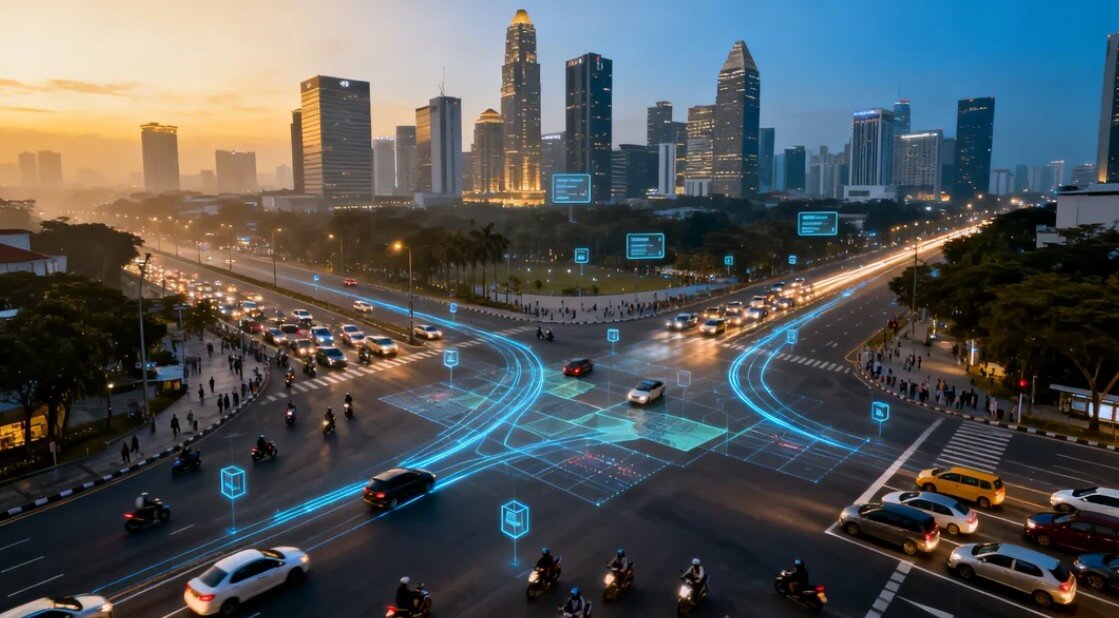
- People and Vehicles: Distinguish between humans, cars, motorcycles, trucks
- Safety Equipment: Detect presence or absence of helmets, vests, goggles, masks (learn more about PPE monitoring)
- Behaviors: Identify loitering, running, fighting, falling
- Zone Violations: Alert when someone enters restricted areas (see intrusion detection)
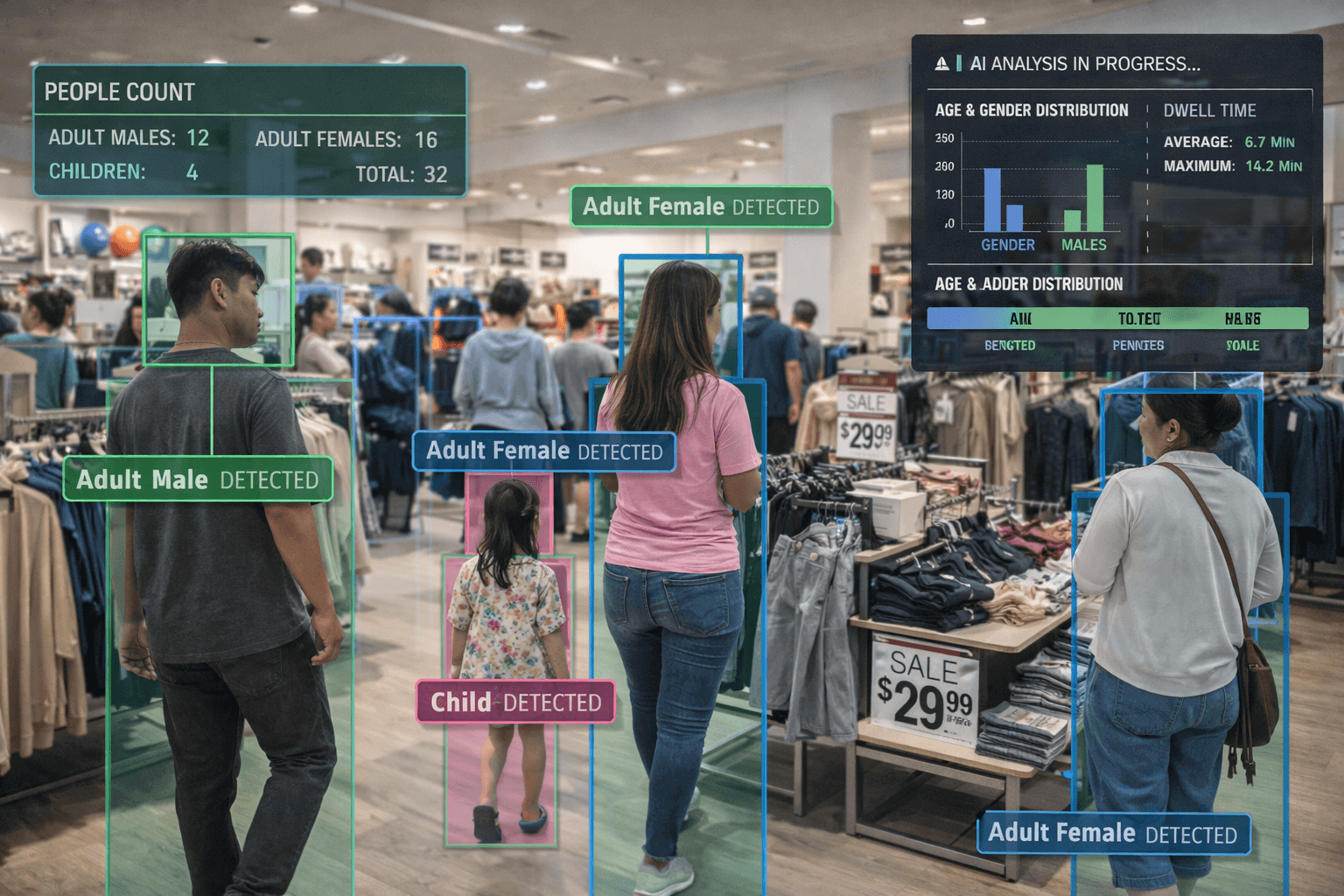
- Counting: Track people entering/exiting for occupancy management
- Anomalies: Flag unusual patterns that deviate from normal activity
Side-by-Side Comparison
Let's compare these two approaches across the factors that matter most to businesses:
| Feature | Traditional CCTV | AI-Powered CCTV |
|---|---|---|
| Threat Detection | Manual monitoring required | Automatic, real-time detection |
| Response Time | Minutes to hours (or never) | Seconds |
| False Alarm Rate | High (motion-based) | Low (<5% with proper setup) |
| 24/7 Monitoring | Requires multiple shifts of staff | Automated, consistent |
| Incident Search | Manual scrubbing through footage | Instant search by event type |
| Analytics | None | Comprehensive dashboards |
| Scalability | Requires more staff per camera | Software scales easily |
| Initial Cost | Lower hardware costs | Additional software licensing |
| Operating Cost | High (personnel dependent) | Lower long-term |
| ROI Timeline | Difficult to measure | Typically 6-12 months |
When Traditional CCTV is Sufficient
AI isn't always necessary. Traditional CCTV remains a practical choice in certain scenarios:
- Basic Documentation Needs: If you primarily need footage for insurance claims or post-incident investigations, and real-time detection isn't critical
- Very Limited Budgets: When initial investment is the primary constraint and operational costs aren't a major concern
- Low-Risk Environments: Areas where the consequences of missed incidents are minimal
- Simple Deterrence: When the visible presence of cameras is the main goal, rather than active monitoring
When You Should Upgrade to AI
Consider upgrading to AI-powered surveillance when your business needs:
1. Real-Time Threat Prevention
If preventing incidents (not just recording them) is important to your operations—such as in manufacturing, construction, or high-security facilities—AI provides the proactive capability traditional systems lack.
2. Compliance Requirements
Industries with strict safety regulations (K3 compliance, OSHA standards) benefit enormously from automated monitoring. AI can document compliance 24/7 and provide audit-ready reports.
3. Operational Efficiency
If you're spending significant resources on security personnel to monitor cameras, AI can reduce this overhead while actually improving detection rates.
4. Business Intelligence
Beyond security, AI surveillance provides valuable operational data: customer traffic patterns, peak hours, queue times, and space utilization metrics.
5. Multiple Locations
Managing security across several sites becomes exponentially easier when AI handles the monitoring and you receive consolidated alerts and reports.
The Upgrade Process: Easier Than You Think
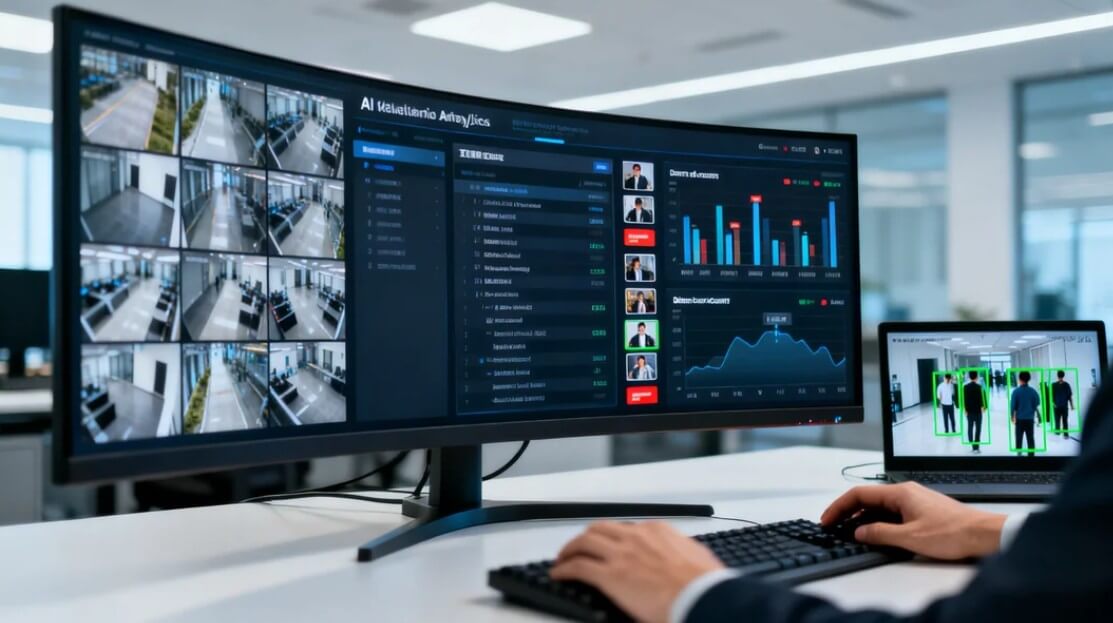
One of the biggest misconceptions about AI-powered CCTV is that it requires completely replacing your existing infrastructure. In reality, most systems can be upgraded by adding software that connects to your current cameras.
What You Can Keep
- Existing IP Cameras: Any camera that outputs RTSP streams can be integrated
- Network Infrastructure: Your current cabling and network setup
- NVR/DVR Systems: Can often continue recording alongside AI analysis
- Monitoring Stations: Existing screens and control rooms
What Gets Added
- AI Processing Server: On-premises or cloud-based computing for video analysis
- Management Software: Dashboard for configuration, alerts, and analytics
- Integration Layer: Connections to your existing systems (access control, alarms, etc.)
Typical Implementation Timeline
- Week 1: Site assessment and system design
- Week 2: Hardware installation and camera integration
- Week 3: AI configuration and zone setup
- Week 4: Testing, training, and go-live
A manufacturing company operating a 15,000 m² facility with 48 existing CCTV cameras was struggling with PPE compliance monitoring. Their security team of 6 guards couldn't effectively monitor all feeds while managing access control and patrols.
After implementing AI-powered monitoring, they connected all 48 cameras to the system without any hardware replacement. The AI was configured to detect missing safety helmets, vests, and safety glasses in designated zones.
Frequently Asked Questions
Yes, in most cases you can keep your existing cameras. AI-powered systems like Oventa work by connecting to your current CCTV infrastructure through RTSP streams. As long as your cameras can output a video stream, they can be enhanced with AI capabilities.
The cost varies based on the number of cameras and features needed. However, since you're not replacing hardware, the investment is primarily in software licensing and implementation. Most businesses see ROI within 6-12 months through reduced security personnel costs and incident prevention.
A typical implementation takes 2-4 weeks, depending on the number of cameras and complexity of the setup. This includes system integration, AI model configuration, staff training, and testing.
Analog cameras can be integrated using video encoders that convert analog signals to digital streams. While this adds a small hardware cost, it's still significantly cheaper than replacing your entire camera infrastructure.
AI-powered CCTV systems typically achieve 95-99% accuracy in detection tasks, compared to human operators who experience attention fatigue after 20-30 minutes of continuous monitoring. AI maintains consistent performance 24/7 without breaks.
Making the Right Decision for Your Business
The choice between traditional and AI-powered CCTV ultimately depends on what you need from your surveillance system. If recording footage for occasional review is sufficient, traditional systems will serve you well at a lower initial cost.
However, if you need active threat prevention, compliance monitoring, operational insights, or simply want to get more value from your existing camera investment, AI-powered surveillance offers capabilities that were impossible just a few years ago—often at a lower total cost of ownership than expanding human monitoring teams.
The good news is that this isn't an all-or-nothing decision. Many businesses start by adding AI capabilities to their most critical cameras and expanding from there as they see results.
Ready to See AI-Powered Surveillance in Action?
Get a personalized demo showing how Oventa can transform your existing CCTV infrastructure into an intelligent security system.
Schedule a Free Demo